Dreamvista Perspective · 28 January 2026
Why Location Comes Before Architecture
A site tells you what it wants to become long before a design is drawn. Reading it properly is the first and least visible part of good development.
Dreamvista Development

Most conversations about a new home begin with the building. Elevations, layouts, finishes. It is the part that photographs well, and the part buyers can picture themselves inside. But the decisions that shape how a home actually feels are usually made earlier, when there is nothing on the land at all.
Land is not neutral. Every plot arrives with a set of conditions — sun path, prevailing wind, slope, drainage, access, neighbours, noise, and whatever might be built next door in ten years. Architecture can work with those conditions or against them. Working against them is expensive, and the cost is usually paid by the person living there.
What a site actually tells you
Before a line is drawn, a site is worth understanding in fairly ordinary terms.
Orientation and sun. In Thailand, the difference between a west-facing living room with no shading and the same room turned a few degrees with a deeper overhang is the difference between an afternoon that is pleasant and one that is spent closing curtains. Orientation is free at the planning stage and almost impossible to correct later.
Topography. Slope affects drainage, cut and fill, retaining structures, road gradients, and how water behaves in heavy rain. A gentle fall across a site can be an advantage — it lets water move, and it lets buildings step. A poorly understood fall becomes a cost and, eventually, a maintenance problem.
Access and approach. How people arrive matters more than most masterplans admit. The route in sets the first impression, determines where service traffic goes, and decides whether a quiet street stays quiet.
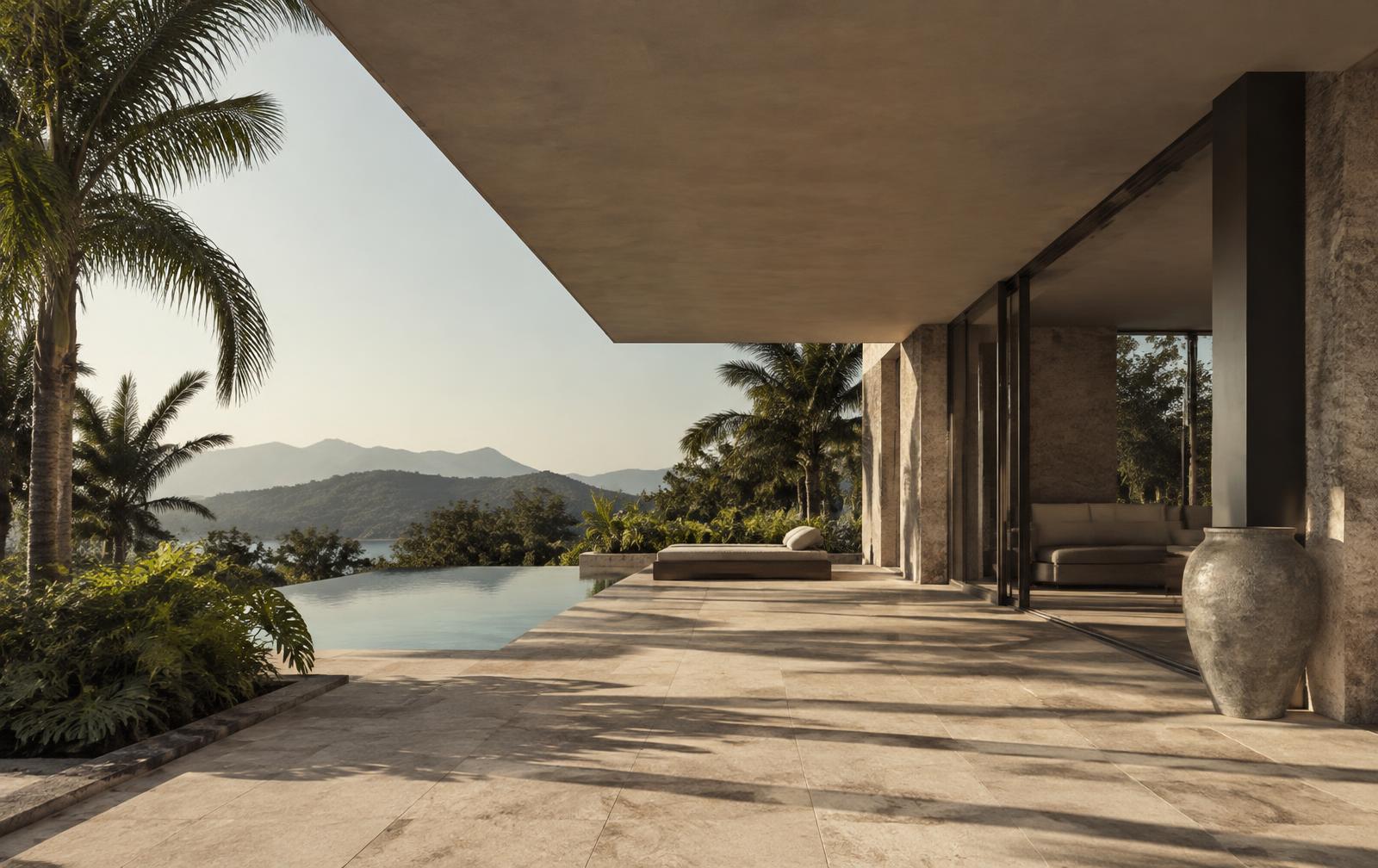
Views, and what protects them. A view is only an asset if something protects it. Land that falls away, a road, a canal, a park or a low-rise neighbour can preserve an outlook. A neighbouring plot with development potential usually will not.
Neighbouring development. The honest question is not what surrounds a site today, but what is permitted to surround it. Local planning rules, land use zoning and existing title boundaries tell you more about the future of an outlook than the current photographs do.
Privacy. Privacy is a planning outcome before it is an architectural one. Where boundaries, driveways, windows and pools sit relative to each other decides whether a home feels private without needing walls and screens everywhere.
Why the order matters
If the architecture is designed first and the site is chosen second, every mismatch has to be absorbed somewhere. Usually it is absorbed by the buyer: a bedroom that overheats, a terrace that is unusable in the afternoon, a pool overlooked by a neighbour, a driveway that cannot take two cars comfortably.
Designing after reading the land produces quieter results. Buildings sit lower or higher. Openings move. Circulation changes. A plot that seemed to want a two-storey home turns out to work better as a single-storey with a roof terrace. None of these decisions make for dramatic marketing, but they are the ones people notice after a year of living somewhere.
Location at two scales
There are two location questions, and they are often confused.
The first is macro: the region, the town, the practical realities of daily life — healthcare, schools, transport, employment, dining, and whether there is a year-round community rather than a seasonal one. This decides whether the address makes sense for the way someone wants to live.
The second is micro: the plot itself, and the fifty metres around it. A strong town with a poor plot is still a poor plot. A quiet lane, a mature tree line, a low-density neighbour and a sensible approach road can make an ordinary address feel considerably better than a prestigious one on a busy corner.
Good development pays attention to both, and does not assume that the first excuses the second.
The uncomfortable part
Reading a site honestly sometimes means concluding that it is not right — that the constraints cannot be resolved without compromising the homes, or that the price only works if the density is pushed beyond what the land can carry gracefully.
That is the part of development nobody sees. It is also the part that determines whether a project is worth building at all.
Architecture can do a great deal. It cannot move a site.
Common questions
- Why does orientation matter so much in Thailand?
- Sun angles and afternoon heat gain have a direct effect on comfort and cooling loads. Orientation, shading and glazing decisions made at planning stage are difficult and costly to change once a building is complete.
- How can a buyer assess a site themselves?
- Visit at different times of day, look at what is upwind and uphill, ask what the neighbouring land is zoned for, and see the access road at a busy hour rather than a quiet one.
- Does a good location guarantee a good home?
- No. A strong town or district still contains weak individual plots. Both the wider location and the immediate surroundings of the plot need to work.
Dreamvista Development
Our approach to land, density and design sits behind every development we undertake.
Discover DreamvistaPrivate Briefings
Private Briefings
Development updates, new projects and selected insights from Dreamvista, sent directly to you.