Dreamvista Perspective · 9 June 2026
Why Low-Density Development Matters
Density is one of the few decisions in development that cannot be revised. It is worth understanding what it actually changes — and what it does not.
Dreamvista Development
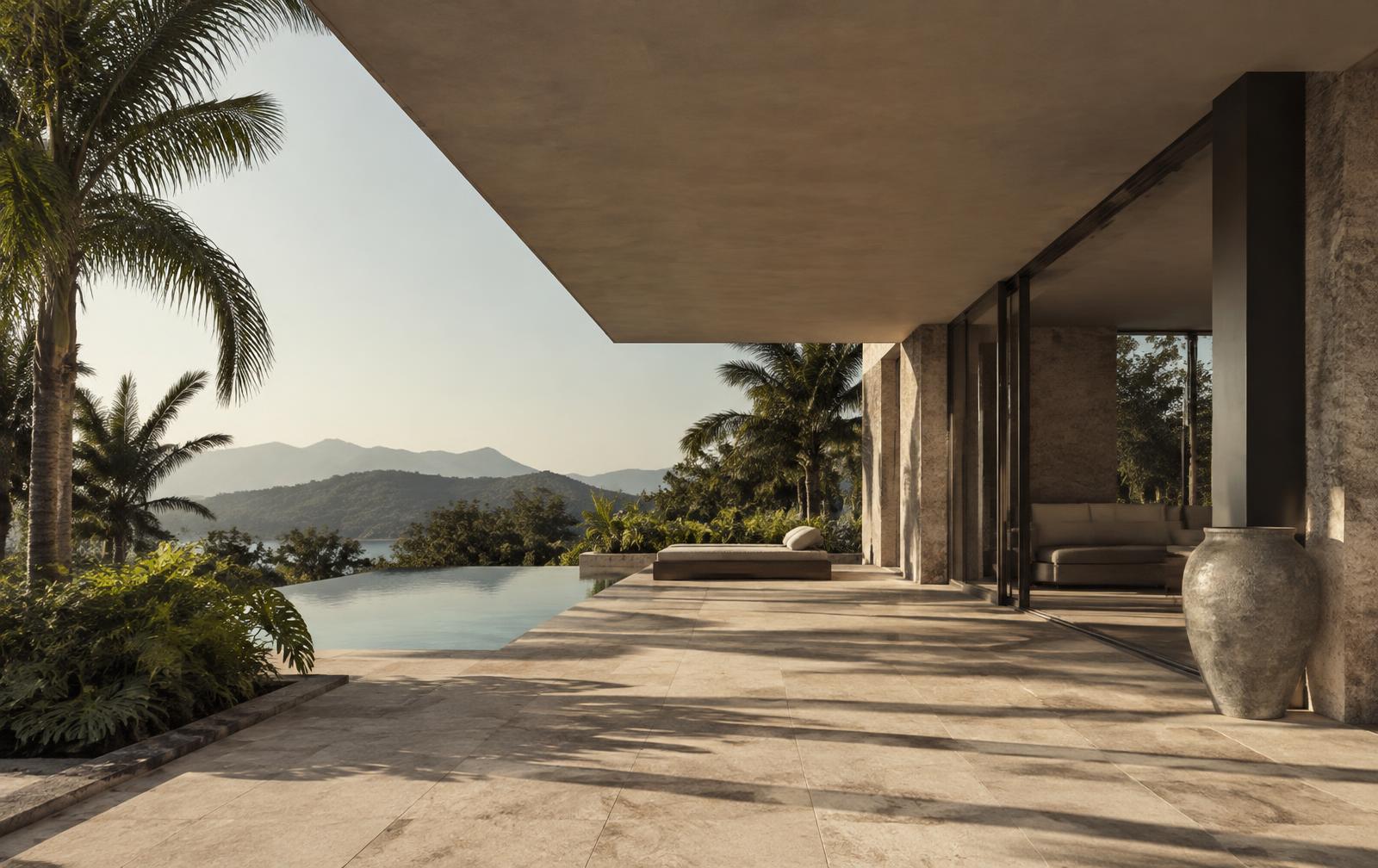
Density — how many homes occupy a given area of land — is decided at masterplanning and then fixed forever. Everything else in a development can be adjusted over time. Density cannot.
Low density is often presented as an unqualified virtue. It is not. It has clear advantages and real trade-offs, and the honest position is that the right density depends on the site, the location and the kind of community being built.
What density actually changes
Privacy. Distance between buildings, and the angles between windows, terraces and pools, determine whether a home feels private without heavy screening. Lower density gives a plan more room to resolve this naturally.
Traffic and movement. Fewer homes mean fewer vehicle movements on internal roads. This affects noise, safety for children, and whether roads can be narrow and quiet rather than wide and busy.
Landscape. Land not occupied by buildings can be planted. Mature trees, hedging and green edges need space and time. Low density is what makes meaningful landscape possible; high density tends to reduce planting to decoration at the edges.
Noise. Sound between neighbours is a function of distance, separation, and what sits between. Pools, air conditioning condensers, generators, cars and outdoor gatherings are all quieter when they are further away.
Views and outlook. Outlook is easier to protect when buildings are further apart and roof heights can be kept low.
Common spaces. Lower density leaves room for shared landscape and amenity that people actually use.
Infrastructure. Fewer homes place lower demand on drainage, water, wastewater and electrical infrastructure — and the same infrastructure has more capacity headroom.
Sense of place. A development with space, planting and varied outlook tends to read as a neighbourhood rather than a scheme. This is subjective, but it is not trivial.
The trade-offs, stated plainly
Low density is not free, and it is not always right.
Cost per home is higher. Land, roads, drainage and utilities are shared between fewer homes, so each carries a larger portion. Lower density usually means higher prices for equivalent houses.
Shared amenities are harder to justify. Pools, gyms, security and landscape maintenance are funded by fewer households. Either service levels are modest or per-household charges are higher.
Efficient land use is a legitimate value. Where land is scarce and well served by infrastructure, higher density can be the better outcome for a town, reducing sprawl and travel distances.
Density is not the same as quality. A well-designed higher-density development with good acoustic separation, generous planting and careful orientation can be more pleasant than a poorly planned low-density one with houses facing each other across a wide road.
Community can suffer at very low density. Below a certain threshold there are not enough neighbours to sustain a sense of community or to support shared facilities.
What matters as much as the number
Two developments with identical density can feel completely different. The variables that decide this are:
- Orientation of homes relative to each other, not just the plot ratio.
- Whether main living spaces and bedrooms face private outlook or a neighbour's window.
- Boundary treatment — planted edges, level changes and setbacks rather than continuous walls.
- Road layout: through-routes generate traffic past homes; short branches do not.
- Where parking, services, bin collection and deliveries happen.
- Landscape maturity at handover and how it is maintained afterwards.
A thoughtful plan at moderate density will outperform a careless plan at low density, every time.
Our position
We prefer low-density planning for the kind of homes we build, because privacy, landscape and quiet are the qualities our buyers value most, and because those qualities are almost impossible to introduce later. That is a preference suited to a particular type of development in a particular kind of location, not a claim that low density is always correct.
The question worth asking of any development is not simply how many homes there are, but what the plan does with the space between them.
Common questions
- Is low density always better?
- No. It improves privacy, planting and quiet, but raises cost per home, makes shared amenities harder to fund, and is not always the best use of well-connected land.
- What matters as much as the density figure?
- Orientation, road layout, boundary treatment, where windows face and how landscape is planned. Two developments with the same density can feel very different.
- How can a buyer judge density on a visit?
- Look at the distance and sightlines between homes, where neighbouring windows and pools sit, how wide and busy the internal roads are, and how much planted space exists between buildings.
Dreamvista Development
Low-density planning shapes the community we are building in Hua Hin.
Explore our developmentsPrivate Briefings
Private Briefings
Development updates, new projects and selected insights from Dreamvista, sent directly to you.